
The history on the d'Esterre Seniors' Centre is based on the 1976 - 1996 booklet compiled by Eileen Turnbell.
A Place Built By and for Community
The story of the d'Esterre Seniors' Centre begins with a simple idea: seniors in Comox deserved a place to gather and enjoy activities.
In the mid-1970s, Comox was already recognized as a wonderful place to retire, thanks to its mild climate, waterfront setting, and access to recreation. In 1974, a delegation of seniors met with the then Mayor, Dick Merrick, to explain that the growing senior population needed a welcoming place to gather, socialize and stay active. This conversation sparked the beginning of something lasting.
The first gatherings
Following that meeting Beatrice Radford, a member of the Comox Recreation Commission, was asked to help organize local seniors. The group began meeting weekly at the Comox Centennial Recreation Centre on Noel Avenue, where they enjoyed crafts, cards, carpet bowling and much more. What started as informal social time quickly grow into a thriving and active seniors community.
As participation increased it became clear that sharing limited recreation space with other groups was not enough. They wanted a permanent home where they could shape programs around their own interests and needs.
A vision takes shape
With support from Recreation Director, Bert Linder and guidance from federal New Horizons representatives, local seniors formed a committee and began planning for a dedicated centre. They applied for funding through the New Horizons program, a federal initiative created to help retired Canadians stay active and involved in community life. Their first grant request focused on furnishing and equipping a centre once a building became available.
At the same time, seniors continued advocating to Town Council for a building of their own. In April 1975, Town Council formally agreed to proceed with the construction of a social centre for seniors. This marked a major turning point in the project history.
Why the site is called dÉsterre
The centre's name comes from the dÉsterre property at Comox's waterfront. Mr. dÉsterre, known as "Dusty", left a significant portion of his property to the Town of Comox. After acquiring the remaining shares, the Town moved ahead with plans for Marina Park. Two buildings stood on the site: one frame house that was eventually removed, and another structure that remained and became known as "Dusty's Den". During Mr. dÉsterre's lifetime, this building had housed items collected on his travels; later, it served as a meeting place for small groups and community use.
The seniors centre was planned beside this historic site, giving it both a scenic location and a direct connection to Comox's waterfront heritage.
A community effort
Town Council requested that the seniors raise $60,000 non-interest debentures. If they could meet that goal, the Town would match the amount and also seek provincial funding. Seniors invested personally, canvassed the district, and successfully raised the full amount. The Comox Rotary Club then stepped forward in a major way, contributing cash and acting a contractors for the project. Volunteers, seniors, Rotary members, and even students form Robb Road school all helped bring the vision to life.
Construction began in 1976. Along the practical decisions improved the building, including the addition of a basement that created more usable space than originally planned. The result was a centre with room for carpet blowing, lounges, washrooms, kitchen facilities, workshops and activity rooms.
Official opening
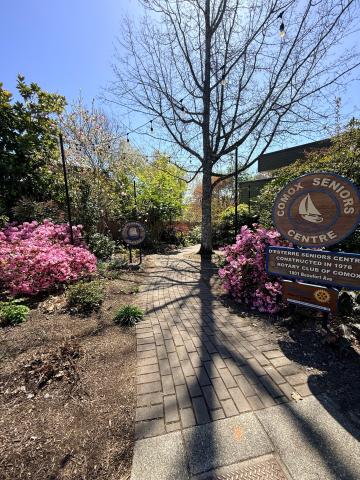
On June 25, 1976, the new seniors' centre officially opened. Soon after, an agreement between the Town of Comox and the seniors organization confirmed that the Town owned the building, while the facility is to be used primarily for seniors from Comox and the surrounding area. This partnership helped establish a model that combines municipal support with volunteer leadership and community programming.
More references on the history can be referenced here: An Overview and Timeline 1997-2012 Compiled by Phyllis Long, Archivist.