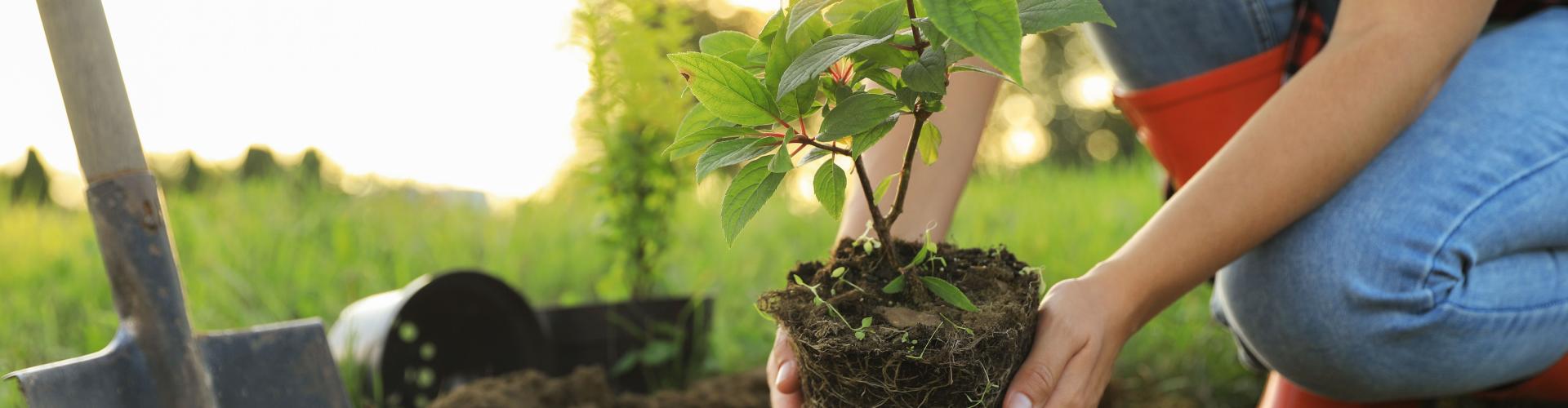
The Town of Comox Tree Protection Bylaw No. 2063 helps protect and manage the urban forest by regulating the damage, cutting, and removal of certain trees. The Bylaw sets out when a Tree Permit is required, when Protected Trees may be removed, and when replacement trees are required.
The Tree Protection Bylaw supports Comox’s Urban Forest Management Strategy by helping protect existing canopy and offset approved tree removals through replacement planting. This supports the Town’s canopy pathway from 25% in 2025 to 26% by 2055, with a long-term target of 30% by 2085.
If you plan to Damage, Cut, or Remove a Regulated Tree, a Tree Permit is required unless a specific bylaw exemption applies. Please review the information below.
If you plan to Damage, Cut, or Remove a Regulated Tree, a Tree Permit is required unless a bylaw exception applies.
Review the 3-page Tree Protection Summary Guide, which includes a Tree Bylaw Flowchart, to determine if the tree is a Regulated Tree.
If the tree is a Regulated Tree, review the circumstances below to determine if a Tree Permit is not required.
Follow the Apply for a Tree Permit steps on this webpage if none of the circumstances below apply.
Circumstances where a Tree Permit is not required for a Regulated Tree:
1. Pruning in accordance with Best Practices
Pruning in accordance with Best Practices does not require a Tree Permit.
Best Practices follow the most current version of the American National Standards Institute (ANSI) American National Standard for Tree Care Operations – Tree, Shrub, and Other Woody Plant Management – Standard Practices and the companion Best Management Practices Series of the International Society of Arboriculture (ISA).
The following activities constitute Damage and are not considered pruning in accordance with Best Practices:
- Removing more than 25% of the tree's total live foliage or bud-bearing branches.
- Topping a tree, unless authorized by the Parks Manager.
- Shearing, harming, or undermining the roots.
- Denting, gouging, drilling, harming, or affixing anything to the tree.
- Removing bark.
- Doing anything that would cause the tree to die.
2. Exceptions
Cutting or Removal that falls under an exception in Section 5 of the Tree Protection Bylaw No. 2063 does not require a Tree Permit. These exceptions include:
- Work by the Town: Cutting or Removal by the Town or its agents while carrying out their duties.
- Lawful forest practices: Cutting or Removal carried out as part of a lawful forest practice under the Forest and Range Practices Act.
- Managed forest land: Cutting or Removal from managed forest land where the Town's Zoning Bylaw allows forestry activities as a primary or secondary use.
- Crown land: Cutting or Removal on Crown land by the Government of Canada or Province of British Columbia, or their agents.
- Public Utilities: Cutting or Removal by a Public Utility on land it owns or holds, when required for the safety, maintenance, or operation of its infrastructure.
- Lawful farm operations: Cutting or Removal required to accommodate a lawful farm operation under the Farm Practices Protection (Right to Farm) Act.
If none of the above circumstances apply, a Tree Permit is required.
For complete requirements and exceptions, see the Tree Protection Bylaw No. 2063.
Questions? Email parks@comox.ca or ask to leave a message at 250-339-2421.
Apply for a Tree Permit
Tree Permits are applied for and processed through Citywide, the Town’s online permitting portal.
You will need to create a Citywide account to submit your Tree Permit application online and receive updates (via email) about your application. You will need a valid email address to create an account.
To set up your account:
- Go to https://citywideportal.com.
- Click Signup in the top right of the page.
- Enter your email address and create a password.
- Click Signup.
- Citywide will send a registration email to the email address you provided.
- Open the email and complete the registration.
- The next time you visit the Citywide Portal, log in using your email address and password.
GO TO STEP 2
Complete the form(s) below - you will upload them to your Tree Permit Application in STEP 3.
- Tree Inventory Form (required)
- Agent Authorization Form (required if the property owner will not be the Tree Permit Applicant)
Questions? Email parks@comox.ca or ask to leave a message at 250-339-2421.
GO TO STEP 3
Follow the steps below to apply for a Tree Permit online through the Citywide Portal.
- Log in to your Citywide account using your email address and password at https://citywideportal.com.
- The first time you log in, you will be prompted to complete your profile. Once your profile is complete, click Update User, then click Home in the top left of the page.
- Click Other Permits/File Requests.
- Click Start Application.
- If you have submitted other applications in the past, click New Application in the top right of the page.
- Select Town of Comox, then click Apply.
- Enter an Application Name (for example, “John's tree permit”), then click Next.
- Enter the address of the property where the tree is located, then click Next at the bottom right of the page.
- Complete the contact information. You will automatically be added as the Applicant.
- If you are not the property owner, click Add Contact to add the property owner's information, including their phone number and email address. Select Property Owner as the role and add the appropriate access level.
- Contacts who are not blocked will receive notifications throughout the application process.
- Select Tree Permit from the drop-down menu, then click Next.
- Complete the required fields and answer the Yes/No questions, then click Next.
- Upload the required submission documents (listed in STEP 2), then click Next.
- Review your application and click Submit at the bottom right of the page.
Please note that the current response time for a submitted Tree Permit Application is 2–4 weeks. Response times can depend on the nature and priority of the application, safety considerations, available resources, operational priorities, and other considerations.
Questions? Email parks@comox.ca or ask to leave a message at 250-339-2421.
Q&A
Review the DO I NEED A TREE PERMIT? section of this webpage to determine if a Tree Permit is required.
If a Tree Permit is required but the tree is in imminent danger of falling and injuring people or property, it may be cut or removed before applying for a Tree Permit.
- A Tree Permit application must be submitted within three business days, with photos clearly showing the circumstances of the tree before it was cut or removed.
- Leave the cut trunk, limbs, roots, or other remains that may be needed by the Parks Manager to determine whether the tree was in imminent danger.
Contact the Town before doing any work on a tree that is wholly or partly on Town-owned or Town-managed land. These trees are Protected Trees, regardless of their size.
Town-owned land includes the public boulevard area between the roadway and the private property line.
Questions? Email parks@comox.ca or ask to leave a message at 250-339-2421.
The current response time for a submitted Tree Permit Application is 2–4 weeks and can depend on the nature and priority of the application, safety considerations, available resources, operational priorities, and other considerations.
Thank you for your patience.
See the Fees and Charges Bylaw No. 2058, section called: SCHEDULE K -- TREE PROTECTION BYLAW NO. 2063
Not related to a development application, the permit is valid for one year from the date of issuance.
Related to a development application, the permit is valid until the earlier of:
- 1 year after final occupancy or,
- 5 years from the date of permit issuance.
The Tree Protection Bylaw allows the Parks Manager to reduce the number of replacement trees required by 1 for every Regulated Tree that is designated as a Retained Tree on the Tree Permit. Once a Retained Tree has been designated, it is considered a Protected Tree. Additional information may be needed by the Parks Manager to evaluate an application that seeks to reduce replacement tree requirements, such as an arborist report.
This reduction is not available if an application will remove more than 10 Regulated Trees, or if an application would result in more than 10 Regulated Trees being removed from the lot in the past 2 years. Please review the example scenarios below.
Example 1 Example 2 Example 3 An application is made to remove 3 Regulated Trees, each of which have a DBH of 20-59 cm. No Tree Permits have previously been issued for this lot.
The Tree Protection Bylaw requires 6 replacement trees be planted to compensate for the removal.
If the 3 trees are removed, no Regulated Trees will remain on the Lot.
The applicant must plant 6 replacements or pay cash-in-lieu to the Town. A combination of replacement trees and cash-in-lieu may be acceptable.
An application is made to remove 3 Regulated Trees, each of which have a DBH of 20-59 cm. No Tree Permits have previously been issued for this lot.
The Tree Protection Bylaw requires 6 replacement trees be planted to compensate for the removal.
If the 3 trees are removed, 15 Regulated Trees will remain on the Lot.
The applicant may elect to designate 6 of the 15 remaining trees as Retained Trees via the Tree Permit application. These trees will become Protected Trees upon permit issuance. No replacements are required to be planted.
An application is made to remove Regulated Trees, each of which have a DBH of 20-59 cm. Last year, a Tree Permit was issued to remove 9 Regulated Trees on this lot.
The Tree Protection Bylaw requires 6 replacement trees be planted to compensate for the removal.
No reduction in the number of required replacement trees is available, because the application will result in 12 Regulated Trees being removed from the lot in the past 2 years.
The applicant must plant 6 replacements or pay cash-in-lieu to the Town. A combination of replacement trees and cash-in-lieu may be acceptable.
- Measure 1.4 metres up the trunk from the high ground at the base of the tree.
- Wrap a measuring tape around the trunk to measure its circumference.
- Divide the circumference by 3.14 to calculate the tree's DBH.
Note: For a tree with multiple trunks, the DBH is the cumulative total of the DBH of each trunk.
