
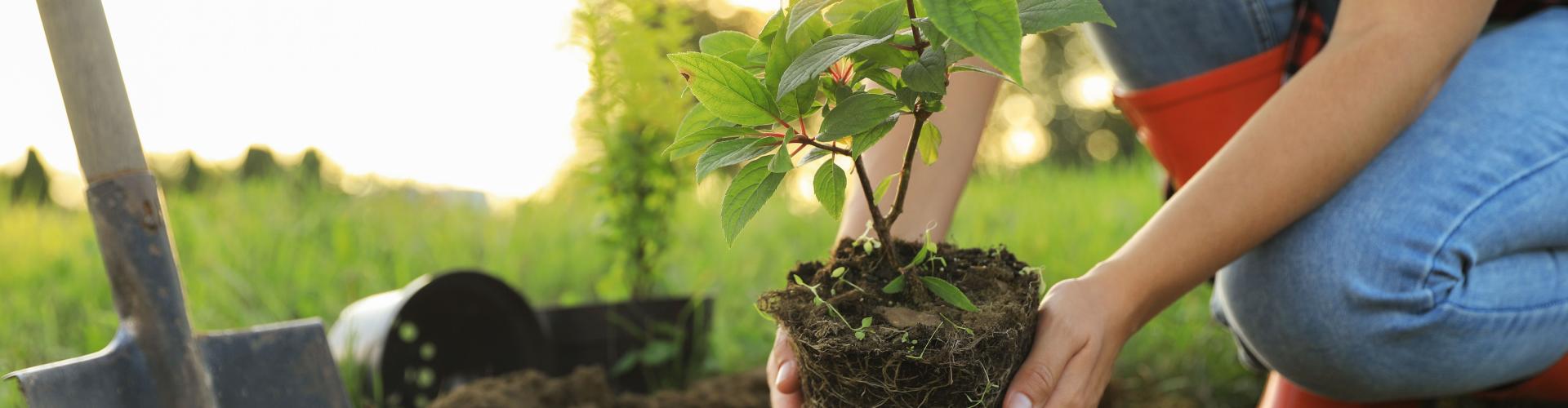
The Town of Comox Tree Protection Bylaw No. 2063 helps protect and manage the urban forest by regulating the damage, cutting, and removal of certain trees. The Bylaw sets out when a Tree Permit is required, when Protected Trees may be removed, and when replacement trees are required.
The Tree Protection Bylaw supports Comox’s Urban Forest Management Strategy by helping protect existing canopy and offset approved tree removals through replacement planting. This supports the Town’s canopy pathway from 25% in 2025 to 26% by 2055, with a long-term target of 30% by 2085.
If you plan to Cut or Remove a Regulated Tree, a Tree Permit is required unless a certain circumstance applies. Please review the information below.
If you plan to Cut or Remove a Regulated Tree, a Tree Permit is required unless a certain circumstance applies.
- Determine if the tree is a Regulated Tree by reviewing the Guide below.
- Note: If you need help on How to Measure a Tree's DBH, see the Q&A section at the bottom of this webpage.
- If you determine that it is a Regulated Tree, a Tree Permit is required unless one of the circumstances below applies:
- Pruning in accordance with Best Practices does not require a Tree Permit, provided the pruning does not constitute Damage to the tree. See the Q&A section at the bottom of this webpage under Pruning.
- Exceptions that do not require a Tree Permit are listed in Section 5 of the Tree Protection Bylaw No. 2063.
- If a Tree Permit is required, follow the steps on this webpage to Apply for a Tree Permit.
- The current response time for a submitted Tree Permit Application is 2–4 weeks. Response times can depend on the nature and priority of the application, safety considerations, available resources, operational priorities, and other considerations.
For complete requirements, see the Tree Protection Bylaw No. 2063.
Questions?
- Email parks@comox.ca (included the property address and your question/s)
- Call 250-339-2421 (ask to leave a message regarding a Tree Permit)
- Determine if the tree is a Regulated Tree by reviewing the Guide below.
Apply for a Tree Permit
Complete the form(s) below. You will be uploading these to your Tree Permit Application in STEP 3.
- Tree Inventory Form (required)
- Agent Authorization Form (only required if Tree Permit Applicant is not the property owner)
GO TO STEP 2
Questions?
- Email parks@comox.ca (included the property address and your question/s)
- Call 250-339-2421 (ask to leave a message regarding a Tree Permit)
Tree Permits are applied for and processed through Citywide, the Town’s online permitting portal.
You will need to create a Citywide account to submit your Tree Permit application online and receive updates (via email) about your application. You will need a valid email address to create an account.
To set up your account:
- Go to https://citywideportal.com.
- Click Signup in the top right of the page
- Enter your email address
- Enter a Password then Confirm Password
- Click Signup
- Watch your email inbox (and spam folder) as the Citywide Portal will be asking you to verify our account
- Open the email and complete the registration
- The next time you visit the Citywide Portal, log in using your email address and password
GO TO STEP 3
Questions?
- Email parks@comox.ca (included the property address and your question/s)
- Call 250-339-2421 (ask to leave a message regarding a Tree Permit)
Follow the steps below to apply for a Tree Permit online through the Citywide Portal.
- Log in to your Citywide account using your email address and password at https://citywideportal.com.
- The first time you log in, you will be prompted to start creating your profile by clicking on Select Client.
- In the Welcome to Citywide Portal, click Other Permits/File Requests.
- Click Start Application.
- If you have submitted other applications in the past, click New Application in the top right of the page.
- If you have not submitted an application with Citywide in the past, you will be prompted to complete My Profile then Update Profile. After that, restart at number 2. above.
- Enter an Application Name (for example, “John's tree permit”), then click Next.
- Enter the address of the property where the tree is located, then click Next.
- Complete the contact information.
- You will automatically be added as the Applicant.
- If you are not the property owner, click Add Contact to add the property owner's information, including their phone number and email address. Select Property Owner as the role and add the appropriate access level. Contacts who are not blocked will receive notifications throughout the application process.
- Click Next.
- Under Type, click on the down arrow (at the far right) to view the drop-down menu, select Tree Permit, then click Next.
- For each question, click on the down arrows (at the far right) to view their drop-down menus.
- Answer the Yes/No questions
- Click Next.
- At the Attachments screen, Upload the required submission document(s) you completed in STEP 1 on this webpage and any other relevant document in the list.
- Click Next.
- At the Final Summary screen, review your application then click Submit at the bottom right of the page.
GO TO STEP 4
Questions?
- Email parks@comox.ca (included the property address and your question/s)
- Call 250-339-2421 (ask to leave a message regarding a Tree Permit)
- Log in to your Citywide account using your email address and password at https://citywideportal.com.
FEES AND SECURITIES:
(1) The Owner shall pay to the Town a fee as set forth in the Fees and Charges Bylaw at the time an application for a Tree Permit is submitted, in the manner required by the Town. See the rates in the Fees and Charges Bylaw No. 2058, section called: SCHEDULE K -- TREE PROTECTION BYLAW NO. 2063.
(2) The fee charged for a Tree Permit application shall be waived where the application concerns only the removal of a dead tree, an invasive species, or a Hazardous Tree.
(3) If the planting of Replacement Trees is a condition of a Tree Permit in connection with a Development Application, the Owner shall pay to the Town a refundable security as set forth in the Subdivision and Development Servicing Bylaw No. 2048.
Questions?
- Email parks@comox.ca (included the property address and your question/s)
- Call 250-339-2421 (ask to leave a message regarding a Tree Permit)
PAYMENT METHODS:
- E-TRANSFER to finance@comox.ca
- Enter your application number in the description field.
- IN PERSON at Town Hall Finance, 1809 Beaufort Avenue
- Via cash, cheque or debit. Bring a print out of your emailed Payment Invoice/Receipt
- MAIL to Town Hall, Attention: Finance, 1809 Beaufort Avenue, Comox, BC V9M 1R9
- Include a print out of your emailed Payment Invoice/Receipt
Q&A
Review the DO I NEED A TREE PERMIT? section of this webpage to determine if it is a Regulated Tree and then if a Tree Permit is required.
If a Tree Permit is required but the tree is in imminent danger of falling and injuring people or property, it may be cut or removed before applying for a Tree Permit.
- A Tree Permit application must then be submitted within three business days, with photos clearly showing the circumstances of the tree before it was cut or removed.
- Leave the cut trunk, limbs, roots, or other remains that may be needed by the Parks Manager to determine whether the tree was in imminent danger.
Questions?
- Email parks@comox.ca (included the property address and your question/s)
- Call 250-339-2421 (ask to leave a message regarding a Tree Permit)
Before doing any work on a tree that is wholly or partly on Town-owned or Town-managed land, contact the Town at parks@comox.ca or ask to leave a message at 250-339-2421.
- Trees on Town-owned or Town-managed land are Protected Trees, regardless of their size.
- Town-owned land includes the public boulevard area between the roadway and the private property line.
Questions?
- Email parks@comox.ca (included the property address and your question/s)
- Call 250-339-2421 (ask to leave a message regarding a Tree Permit)
If pruning is done in accordance with Best Practices (see resources below) then a Tree Permit will not be required.
If any of the following damage will occure then a Tree Permit will be required:
- Poisoning
- Burning
- Removing more than 25% of the tree's total live foliage or bud-bearing branches.
- Topping a tree, unless authorized by the Parks Manager.
- Shearing, harming, or undermining the roots.
- Denting, gouging, drilling, harming, or affixing anything to the tree.
- Removing bark.
- Doing anything that would cause the tree to die.
Best Practices follow the most current version of the American National Standards Institute (ANSI) American National Standard for Tree Care Operations – Tree, Shrub, and Other Woody Plant Management – Standard Practices; and the companion Best Management Practices Series of the International Society of Arboriculture (ISA).
Questions?
- Email parks@comox.ca (included the property address and your question/s)
- Call 250-339-2421 (ask to leave a message regarding a Tree Permit)
The current response time for a submitted Tree Permit Application is 2–4 weeks and can depend on the nature and priority of the application, safety considerations, available resources, operational priorities, and other considerations.
Thank you for your patience.
(1) The Owner shall pay to the Town a fee as set forth in the Fees and Charges Bylaw at the time an application for a Tree Permit is submitted, in the manner required by the Town. See the rates in the Fees and Charges Bylaw No. 2058, section called: SCHEDULE K -- TREE PROTECTION BYLAW NO. 2063.
(2) The fee charged for a Tree Permit application shall be waived where the application concerns only the removal of a dead tree, an invasive species, or a Hazardous Tree.
(3) If the planting of Replacement Trees is a condition of a Tree Permit in connection with a Development Application, the Owner shall pay to the Town a refundable security as set forth in the Subdivision and Development Servicing Bylaw No. 2048.
Questions?
- Email parks@comox.ca (included the property address and your question/s)
- Call 250-339-2421 (ask to leave a message regarding a Tree Permit)
Not related to a development application, the permit is valid for one year from the date of issuance.
Related to a development application, the permit is valid until the earlier of:
- 1 year after final occupancy or,
- 5 years from the date of permit issuance.
Questions?
- Email parks@comox.ca (included the property address and your question/s)
- Call 250-339-2421 (ask to leave a message regarding a Tree Permit)
The Tree Protection Bylaw No. 2063 allows the Parks Manager to reduce the number of replacement trees required by 1 for every Regulated Tree that is designated as a Retained Tree on the Tree Permit. Once a Retained Tree has been designated, it is considered a Protected Tree. Additional information may be needed by the Parks Manager to evaluate an application that seeks to reduce replacement tree requirements, such as an arborist report.
This reduction is not available if an application will remove more than 10 Regulated Trees, or if an application would result in more than 10 Regulated Trees being removed from the lot in the past 2 years. Please review the example scenarios in the table below.
Questions?
- Email parks@comox.ca (included the property address and your question/s)
- Call 250-339-2421 (ask to leave a message regarding a Tree Permit)
Example 1 Example 2 Example 3 An application is made to remove 3 Regulated Trees, each of which have a DBH of 20-59 cm. No Tree Permits have previously been issued for this lot.
The Tree Protection Bylaw requires 6 replacement trees be planted to compensate for the removal.
If the 3 trees are removed, no Regulated Trees will remain on the Lot.
The applicant must plant 6 replacements or pay cash-in-lieu to the Town. A combination of replacement trees and cash-in-lieu may be acceptable.
An application is made to remove 3 Regulated Trees, each of which have a DBH of 20-59 cm. No Tree Permits have previously been issued for this lot.
The Tree Protection Bylaw requires 6 replacement trees be planted to compensate for the removal.
If the 3 trees are removed, 15 Regulated Trees will remain on the Lot.
The applicant may elect to designate 6 of the 15 remaining trees as Retained Trees via the Tree Permit application. These trees will become Protected Trees upon permit issuance. No replacements are required to be planted.
An application is made to remove Regulated Trees, each of which have a DBH of 20-59 cm. Last year, a Tree Permit was issued to remove 9 Regulated Trees on this lot.
The Tree Protection Bylaw requires 6 replacement trees be planted to compensate for the removal.
No reduction in the number of required replacement trees is available, because the application will result in 12 Regulated Trees being removed from the lot in the past 2 years.
The applicant must plant 6 replacements or pay cash-in-lieu to the Town. A combination of replacement trees and cash-in-lieu may be acceptable.
DBH = Diameter at Breast Height
Follow the steps below:
- Measure 1.4 metres (4.6 feet) up the trunk from the high ground at the base of the tree.
- For a tree with multiple trunks, the DBH is the cumulative total of the DBH of each trunk.
- Wrap a measuring tape around the trunk to measure its circumference.
- Divide the circumference by 3.14 to calculate the tree's DBH (diameter at breast height).
Notes:
- 30 cm = 11.8 inches
- 50 cm = 19.69 inches
- Measure 1.4 metres (4.6 feet) up the trunk from the high ground at the base of the tree.
- Email parks@comox.ca (included the property address and your question/s)
- Call 250-339-2421 (ask to leave a message regarding a Tree Permit)